Amish Folk Art – Wholecloth Quilts
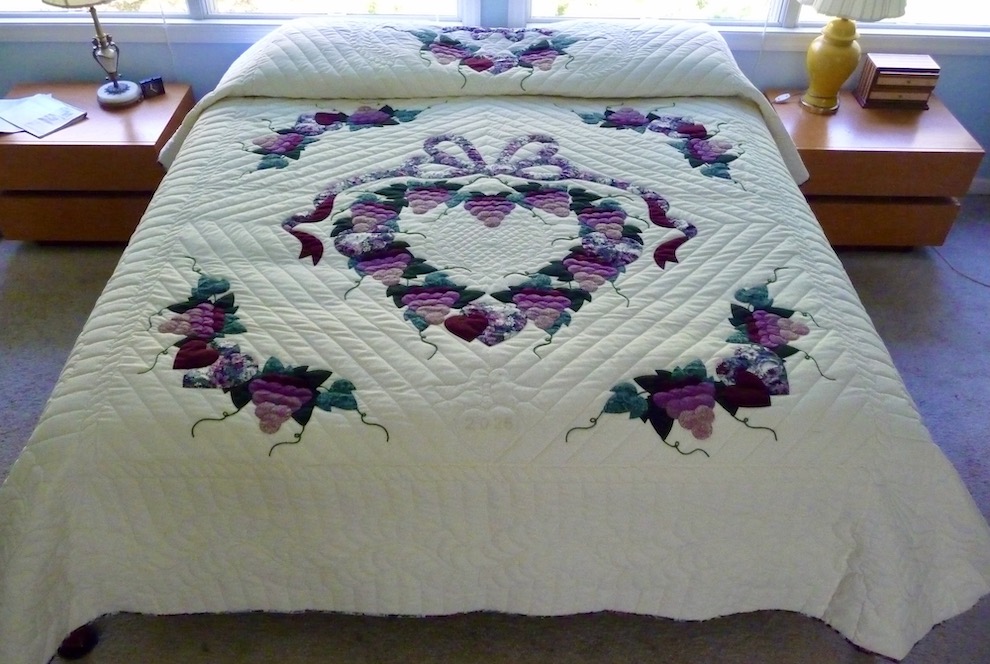
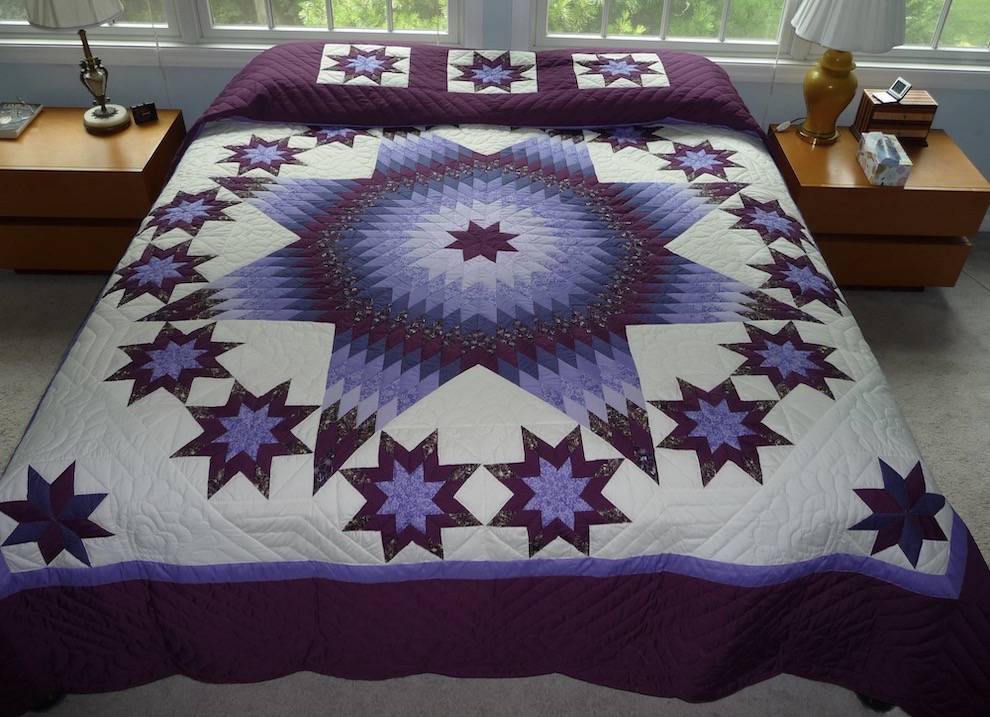
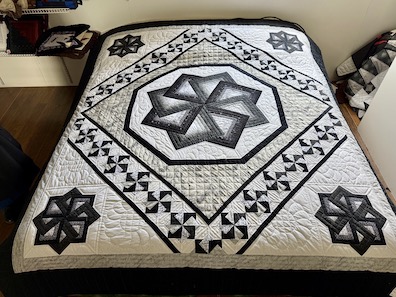
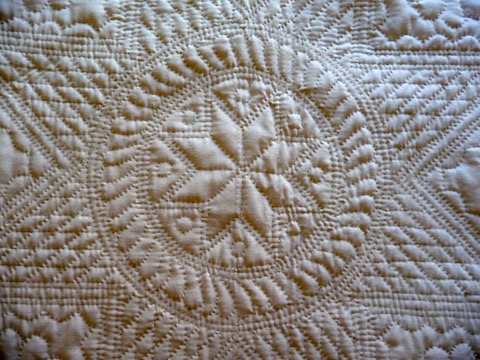
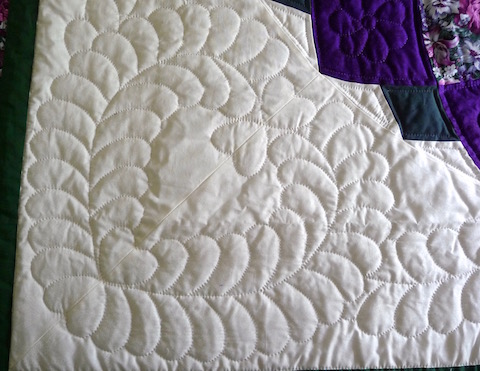
A Wholecloth quilt is also referred to as an Heirloom or white-on-white quilt and is hand quilted in varied patterns. A few popular Wholecloth patterns include the Feathered Pineapple, the Amish Star and the Queen Anne Star. Admirers of this style of quilt often assume that this traditional and desirable pattern originated in the United States during “pioneer” days. In truth, the origins of Wholecloth quilt patterns go back further than you might think.
Examples of prized Wholecloth quilts are found within European royal houses as early as the 17th century. By the mid-1700’s the middle class was ordering Wholecloth quilts for their own homes. It was said that to own something that required such a high standard of workmanship was a sign of affluence.
By the mid 18th century this pattern had worked its way to American shores, sometimes in conjunction with the “trapunto” technique: a decorative stuffing or padding of quilted areas producing a raised surface.
As for Amish hand quilted Wholecloths, only the most accomplished hand quilters and pattern makers can create Wholecloth quilts. Wholecloth patterns typically take twice the time it takes to create a patchwork quit. Some require 1,000 or more yards of thread to complete the extensive hand quilting. We once sold a king size Heirloom in which 1,400 years of thread were used!


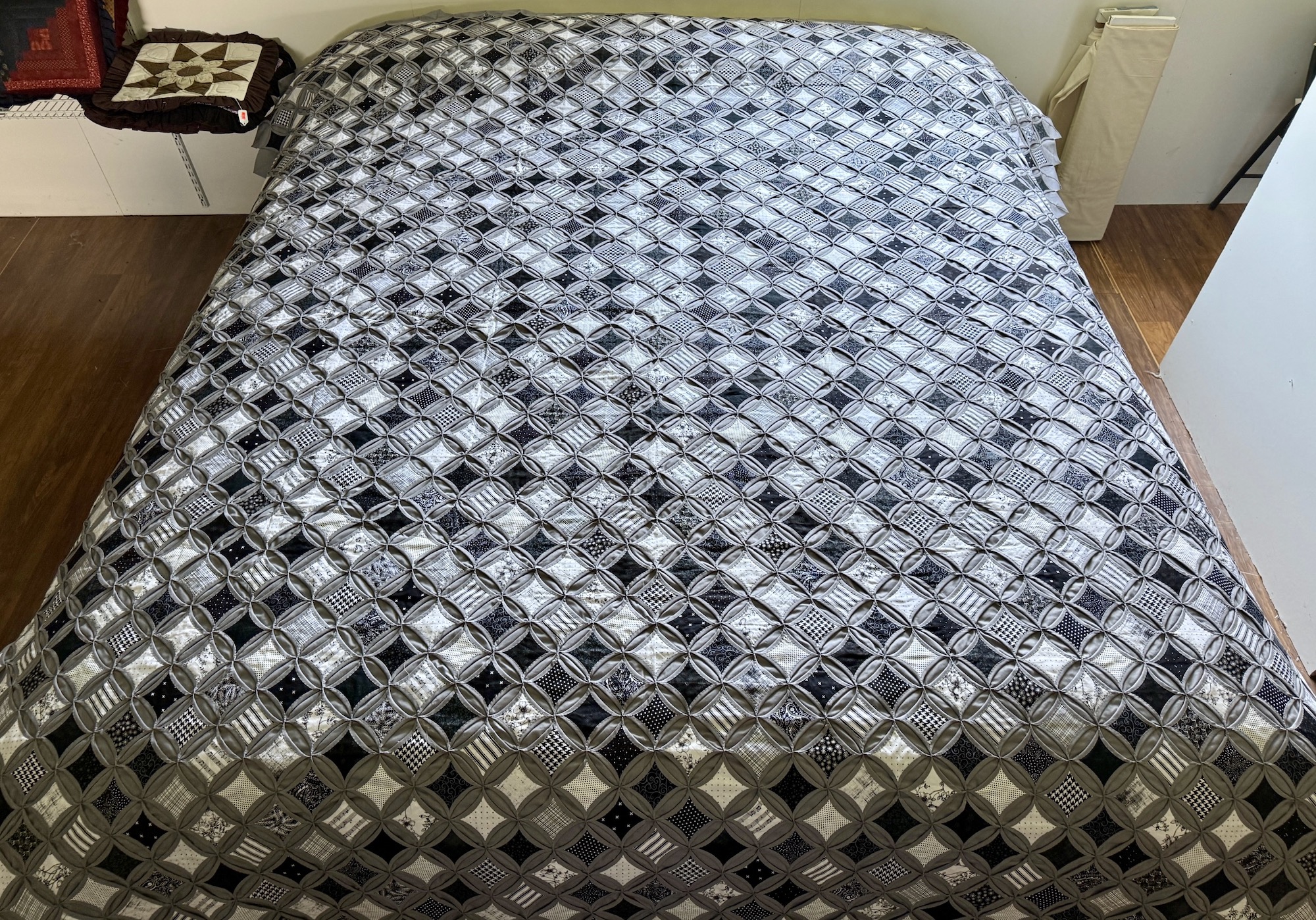
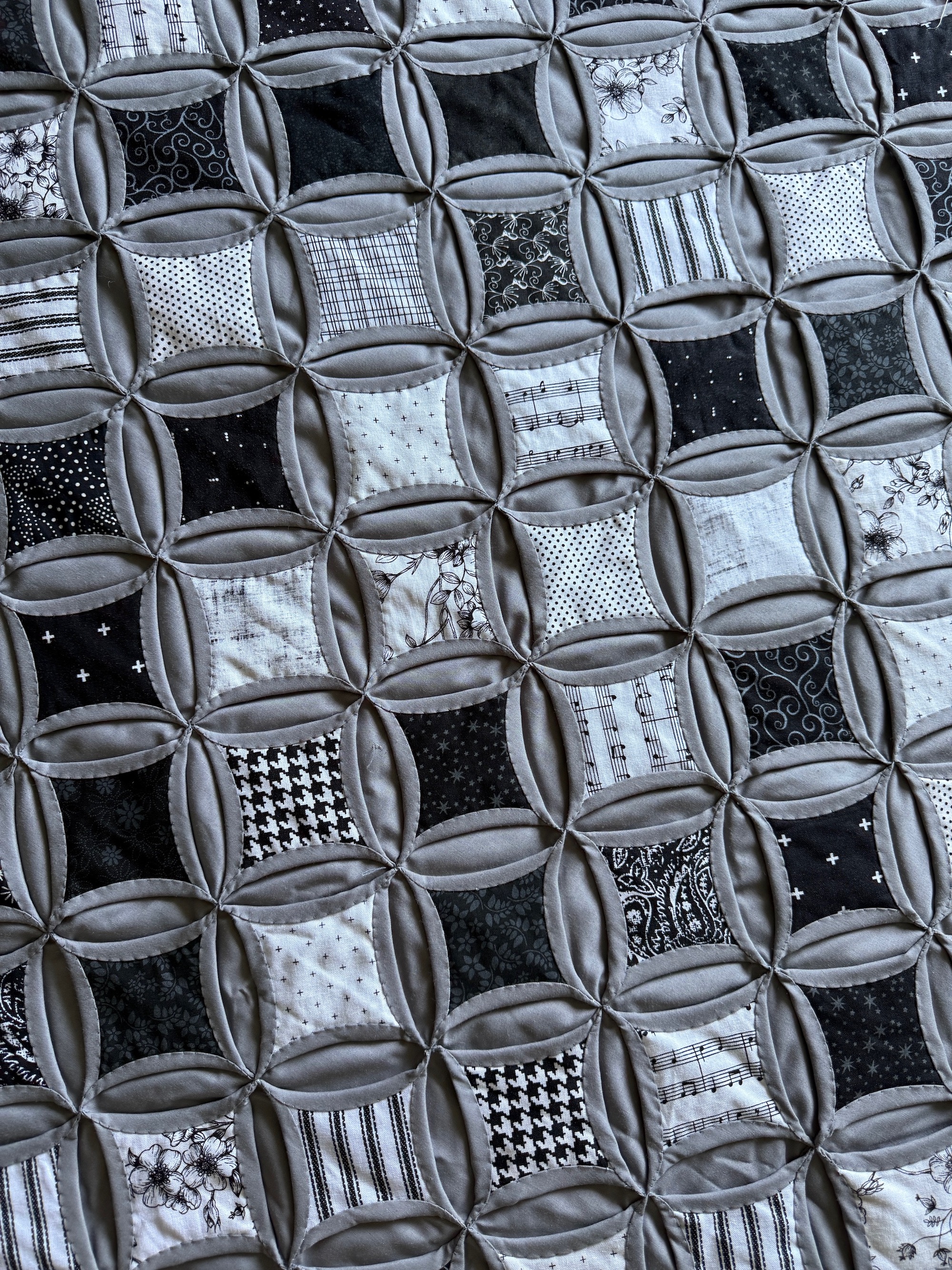
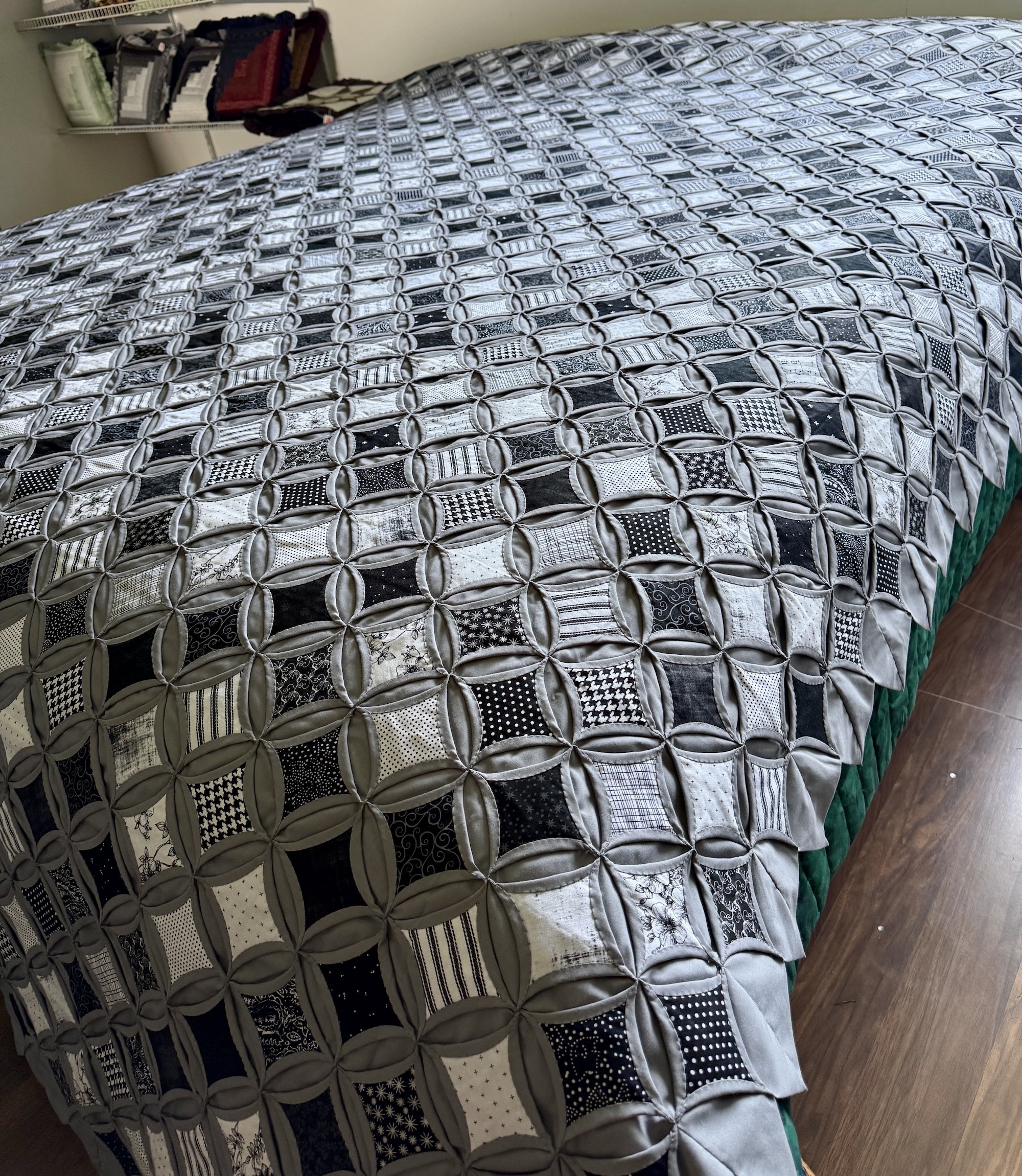
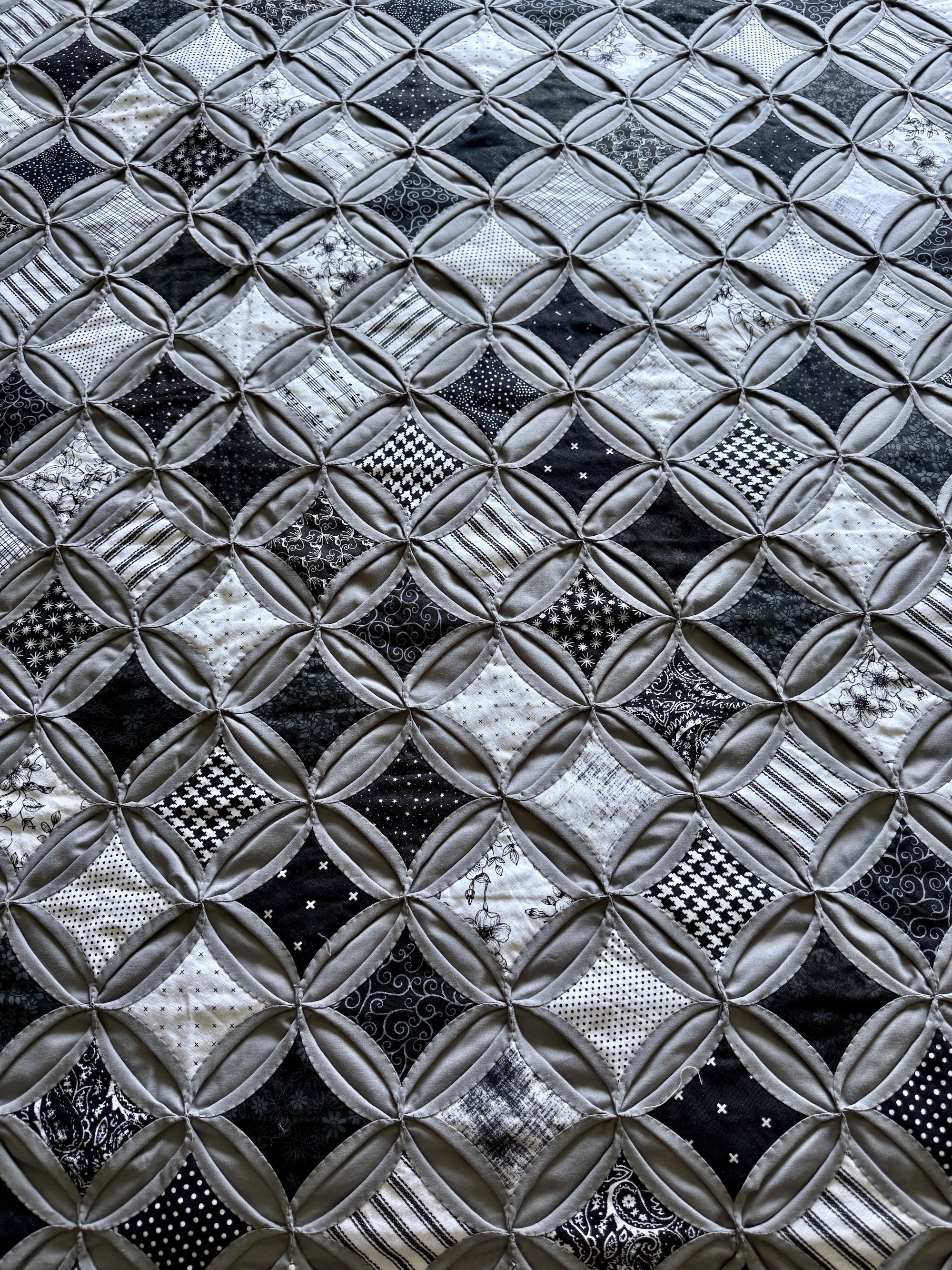
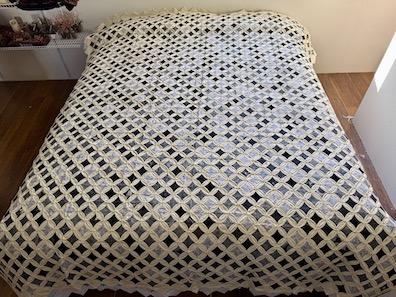
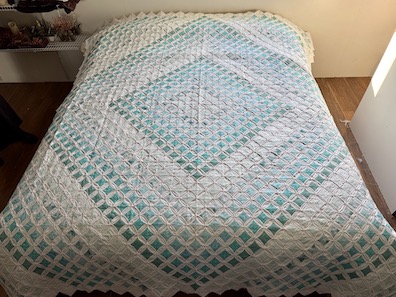


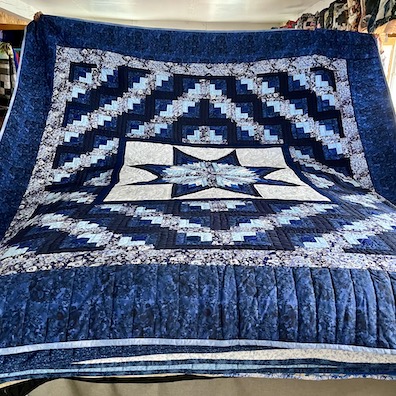


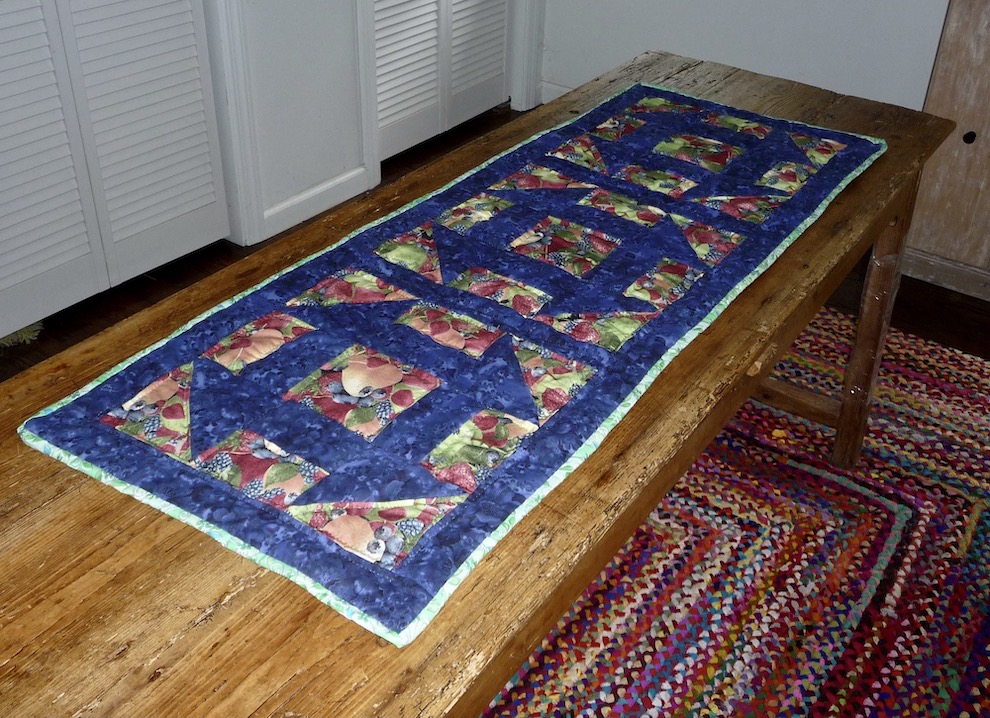
















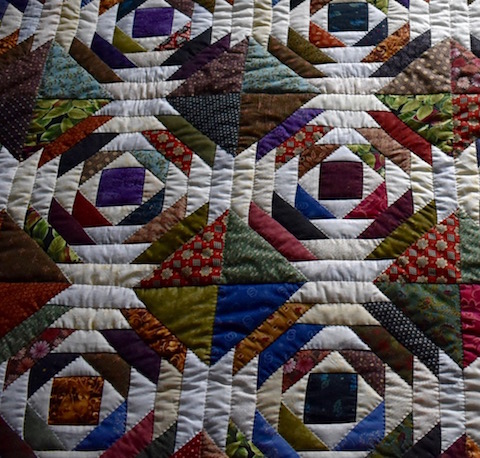
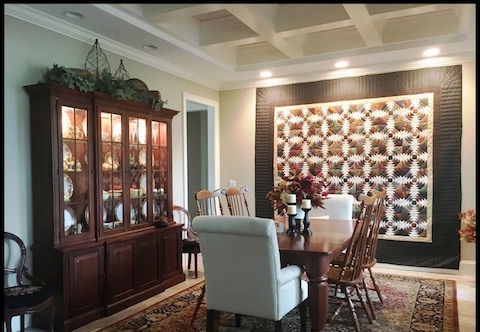
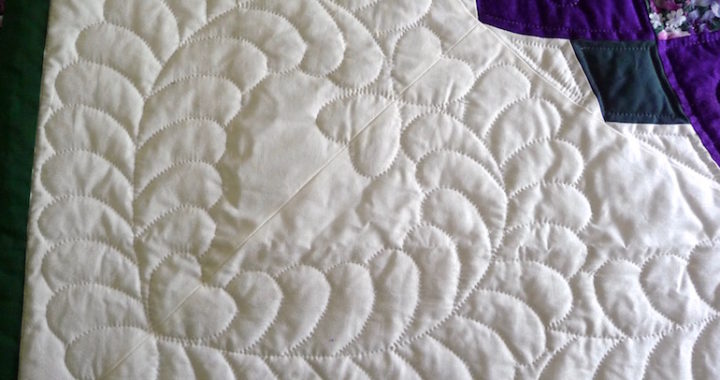
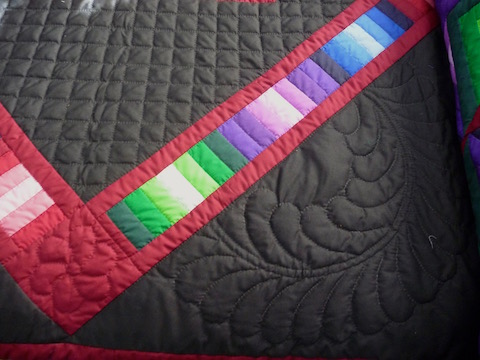








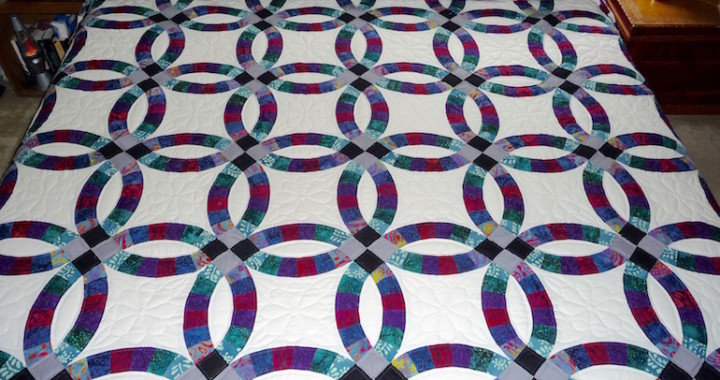
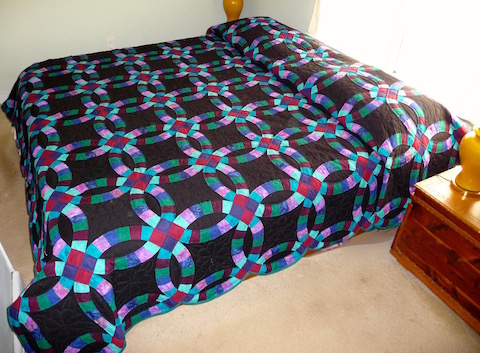 Physical examples of double ring (or Double Wedding Ring) patterns in textiles can be found in museum collections dating as early as 1825. However, double interlocking circles, much like those seen in Double Wedding Ring quilt patterns, can be found on Roman cups dating back as to the 4th century
 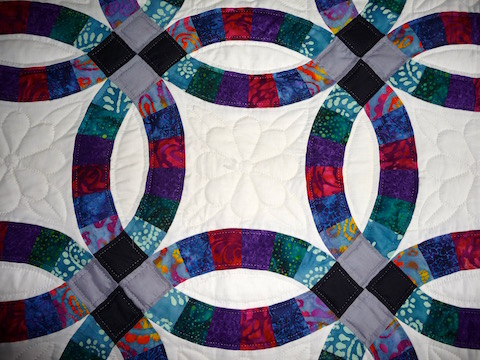 A.D. This unique and difficult to execute pattern also carries names as varied as Rainbow, Endless Chain, King Tut and Friendship Knot.
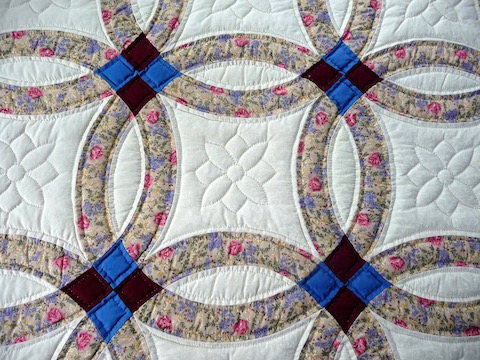 one piece of fabric or many small pieces sewn together to create an arc. Quilters with a good eye for color typically place contrasting colors at the point where the arcs meet. A quilter’s piecing
 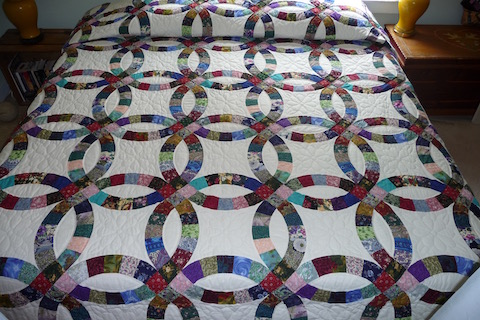 combined with her hand quilted details give the rings depth and movement.